Isothermal LIDAR
5 Color LAMP anyone?

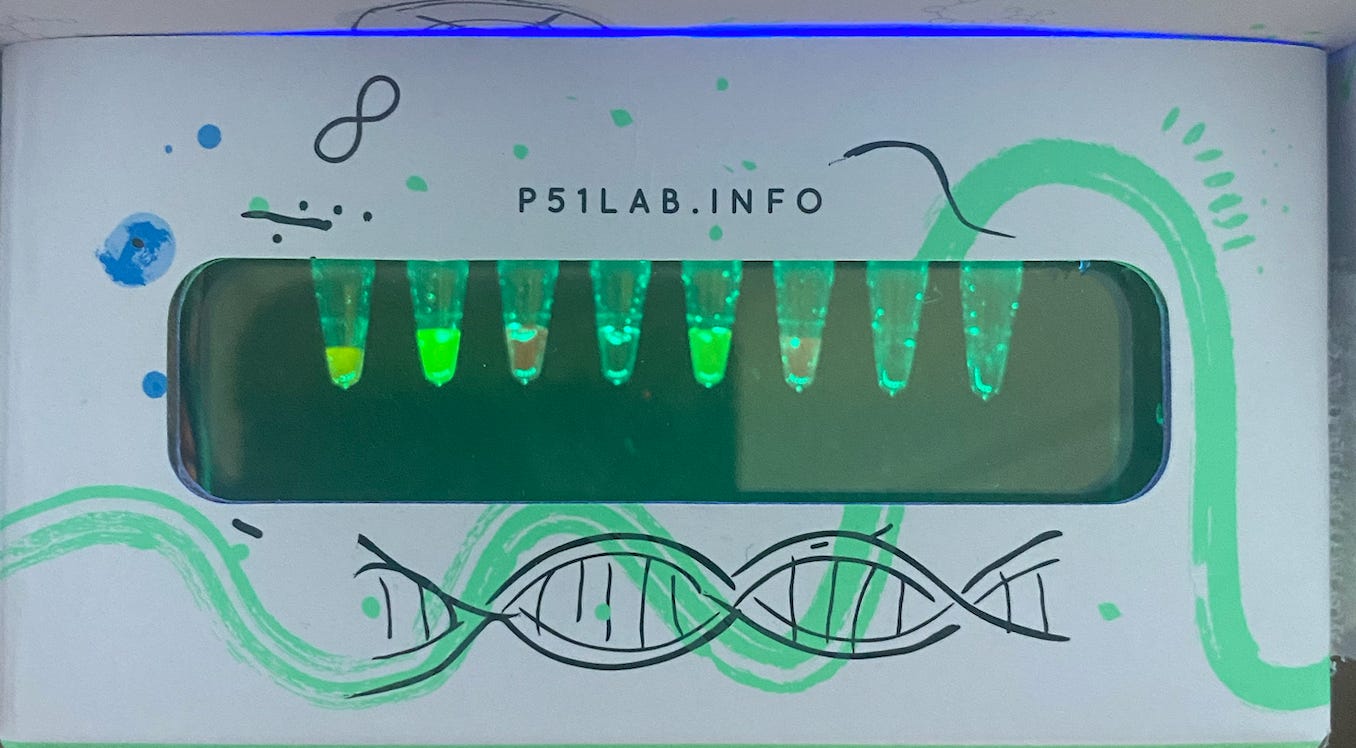
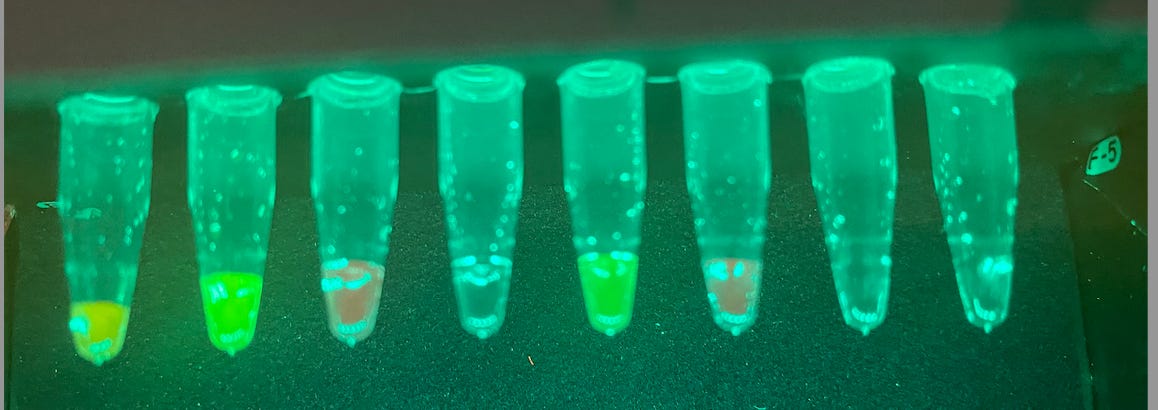
A few people at CannMed asked this question.
Since most Point of Care DNA testing tools use Bst polymerase or enzymes that do not have FEN1 activity (5→3 exo-), they cannot utilize multi-color taqman. Many of these tests remain single color and therefor lack internal controls when you need them most.
LAMP is one such method we have some experience with but have found it to be very sensitive to contamination from crude boil preps often used in the field. Likewise any agricultural foliar spray residues that might be left on the plant can inhibit crude field preps if the read out chemistry isnt robust.
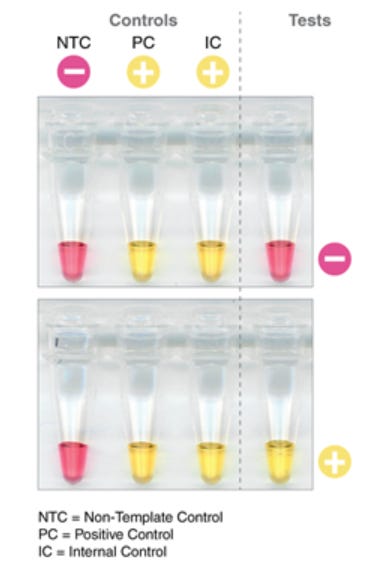
This is largely the function of the type of read out chemistry used. One of the most popular read out chemistries is the use of pH sensitive dyes that change from Pink to Yellow as the LAMP reaction spits out H+ groups during the synthesis of nucleic “ACIDS”. So to make this pH sensitive colorimetric (not fluorescent) readout occur, they need to strip all the buffer out the reaction so the pH swings very easily during amplification.
So if you’re plant is in slightly acidic water or has just been sprayed by something acidic, that spills into your LAMP assay and creates False positives with that pH triggered colorimetric test.
And since you have only 1 color, you have to run Positive controls and Internal controls in their own wells. You really don’t have internal controls when they are external to your assay. Internal controls should always light up to prove your sample didn’t have Polymerase inhibitors (think terpenes) so putting them in other wells because your detection chemistry is single color exposes you to many false negatives.
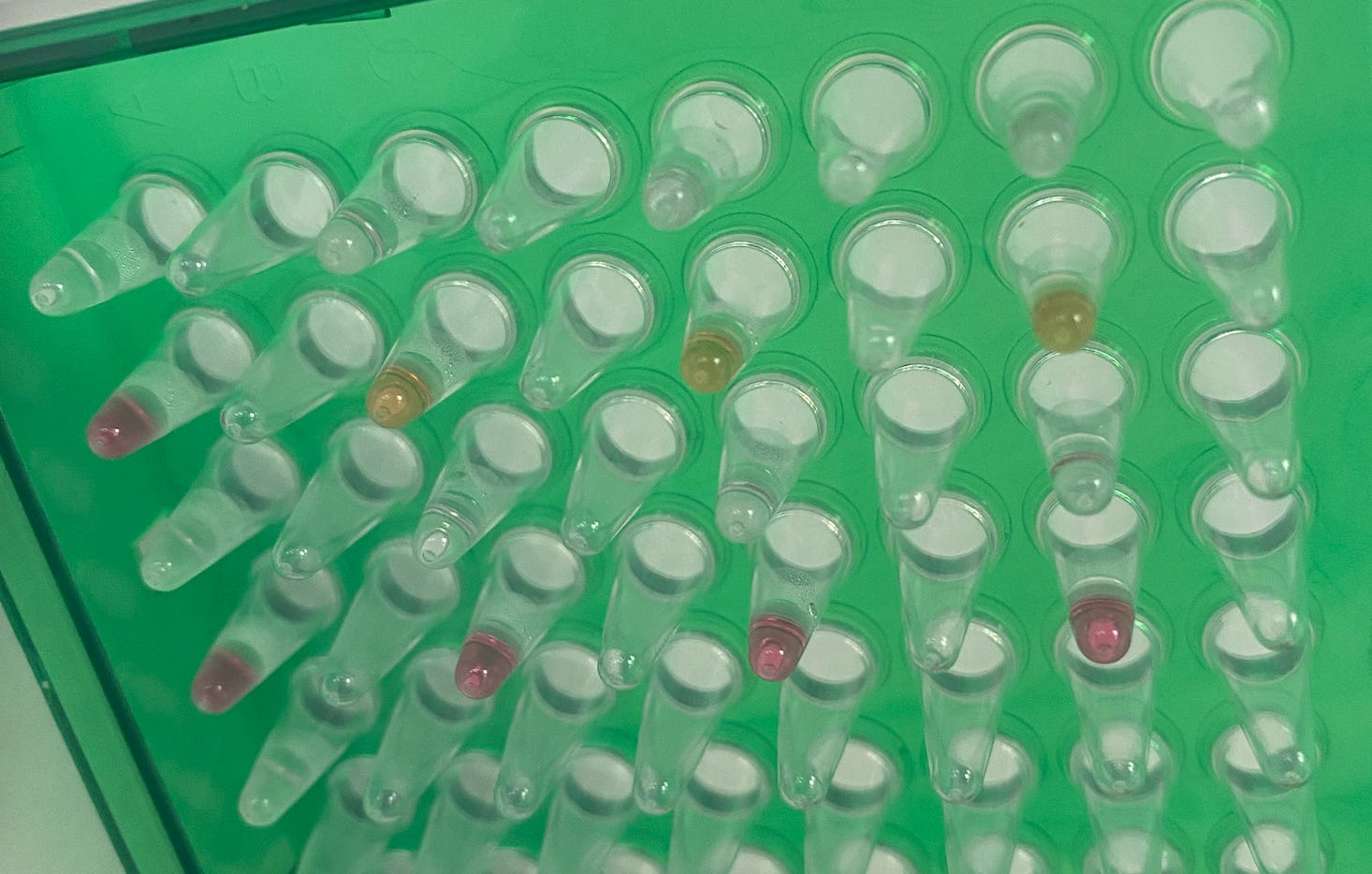
The pictures at the top of this post are LIDAR reactions being illuminated with a portable P51 labs transilluminator. This only have a Blue LED so it will not excite all 5 colors but does handle FAM and SUN well enough to read it with the naked eye on an iPhone.
We have in fact run Bst polymerases with LIDAR in a simple 2 primer PCR like model at isothermal 65C against Aspergillus and it creates Ct curves. These cycles are just imaging times (like 30sec imaging cycles) and I didn’t spend much time optimizing any of these. The Bst 2.0 polymerase was dug out of a freezer and was 8 years old and expired but we did get melt curves although they were broader (more FWHM) than qPCR products.
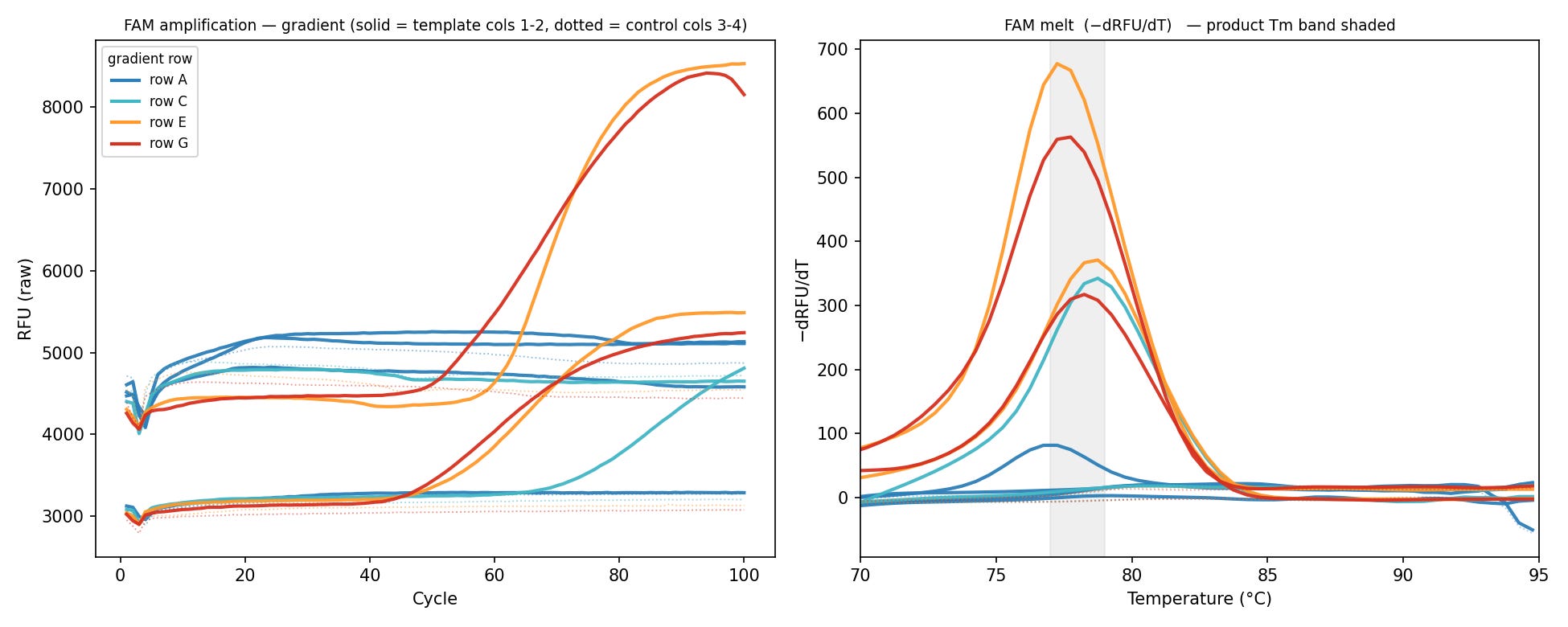
I then tried to find unexpired Bst polymerase and all I had in the freezer was the NEB colorimetric kits which I threw LIDAR probers into so we had both colorimetric and fluorescent read outs in the same well. In this case the colorimetric dye may have risen the background in the FAM channel
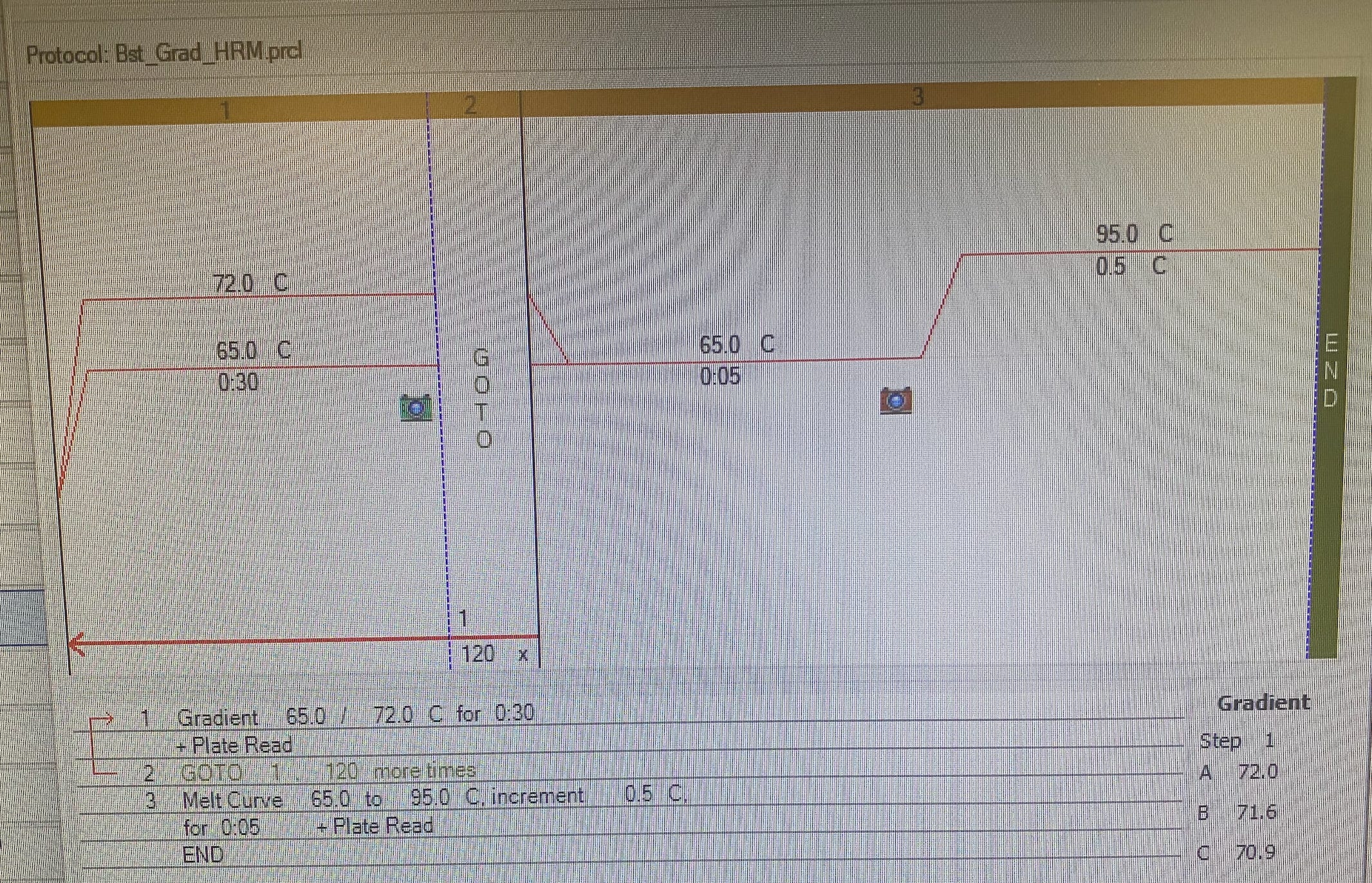
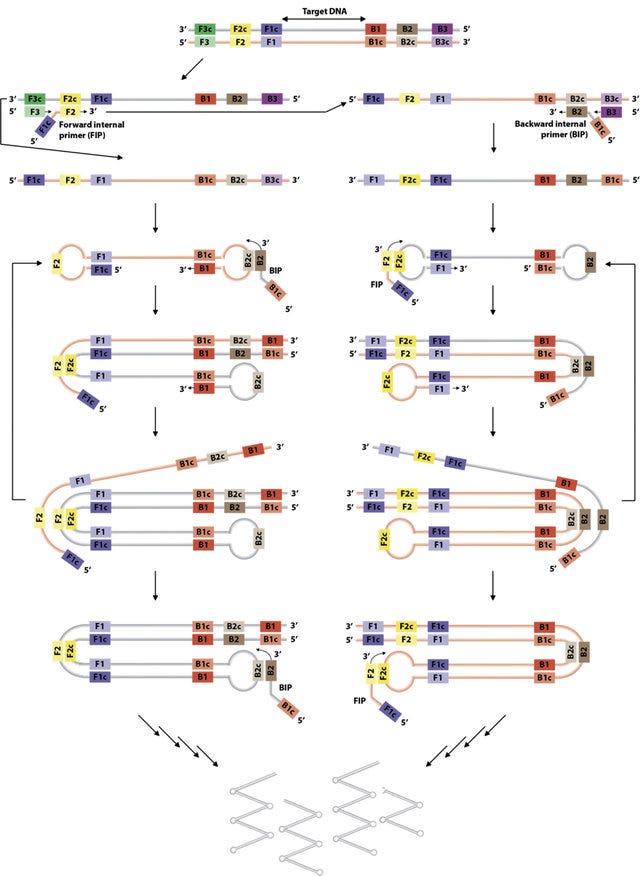
The amp curves a little slower than what we get from 3 step cycling with LIDAR but they still amplify. The LIDAR probers behave wonderfully as LIDAR doesn’t require any 5→3 exo and Bst polymerase doesn’t have any but Bst being strand displacing is a little slower than qPCR that cycles. LAMP turbo charges the reaction to make up for this with very high primer concentrations and a concatemer amplification method that more than doubles every cycle. If you can get your head around the hall of mirrors LAMP amplification.. congrats.. Its very hard to conceptualize and to design primers for as it often requires 4-6 primers per target and has much higher primer dimer related false positives. Its hard (but not impossible) to use as a quantitative reaction as you dont have that nice perfect doubling of DNA every cycle and there are no cycles…. Just time at 60-65C and imaging every X number of seconds during the reaction but the reaction is usually done in 25 minutes.
A few considerations.
This reaction creates massive concatemers so HRMs are meaningless and cannot be plexed. While DUAL-LIDAR could be deployed (2 loop primers as probers), we don’t have orthogonal dequenching since Taqman can’t be run side by side with LIDAR. This limits the color combos to a 5 Choose 2 problem (10 color combos).
So LIDAR will likely enable 5-10 Color LAMP but it is not our primary focus as LAMP has FP and FN issues surrounding its complicated primer requirements (many primers and higher concentrations) and in our experience it is usually 5-10X less sensitive than qPCR. Highly multiplexed LAMP assays are hard to design as there are many more primer interactions you have to consider and everything has to work perfectly at one temperature. You don’t have as many knobs to turn to optimize around primer dimer artifacts like Touchdown PCR or different annealing temperatures than extension temperatures.
Unacceptable Jessica has a great write up on LIDAR. I’ve been traveling from Boston to Lake Tahoe and now up to Camp Nakamoto in NH so I’ve been limited to brief jargony write ups while half asleep at airports.
☀️Safe travels… I vote for a 7 color lamp, not my field of know how , but anything that proves the last 5 years was criminal, I am all for . 🎯🤗❤️
Here it is! https://jessicar.substack.com/p/medicinal-genomics-new-lidar-technology