RNA:DNA hybrids survive digestion in mRNA vaccine manufacturing
Use of Bitcoin to immortalize PrePrint submissions

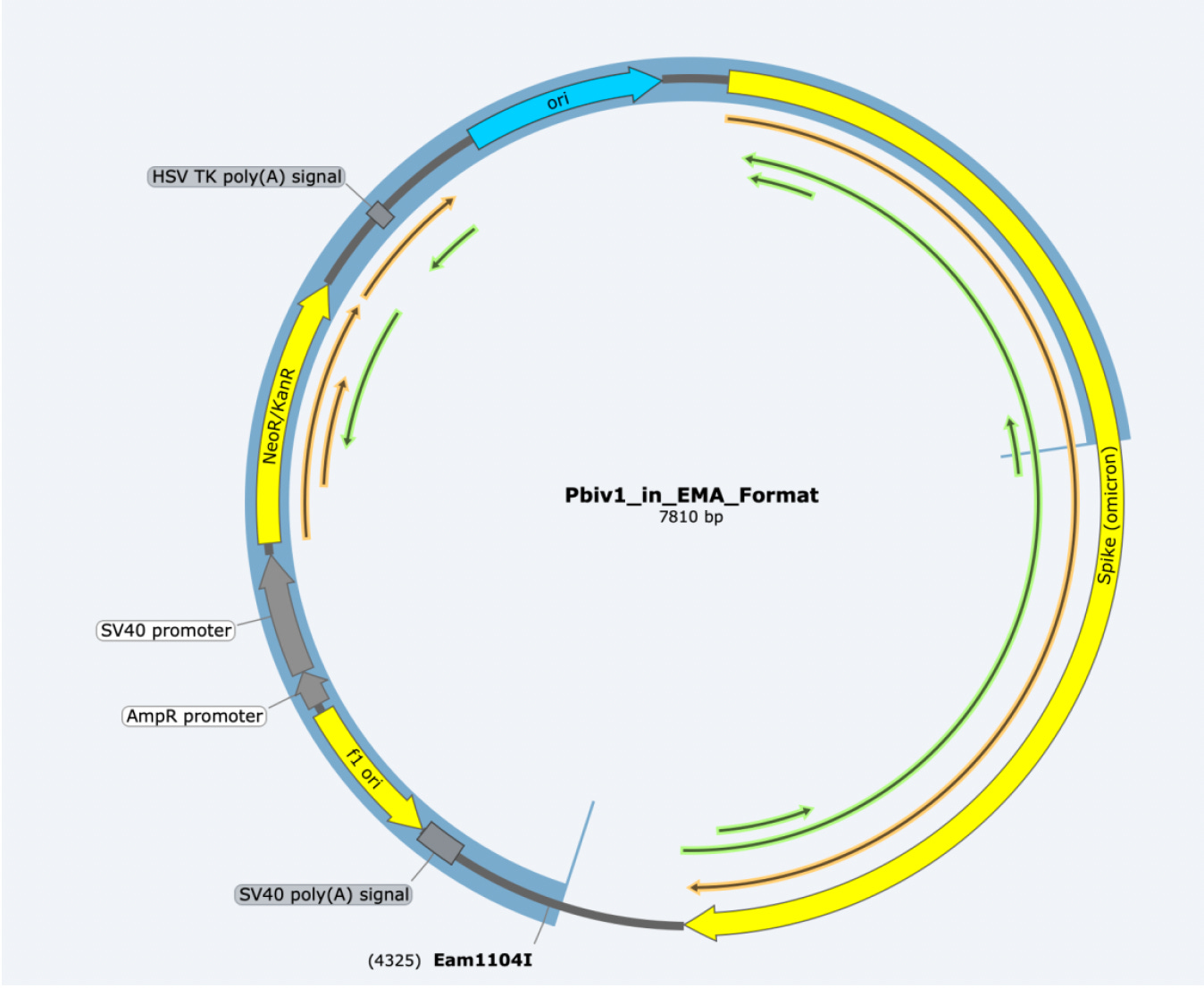
Paper now on Zenodo
This substack will be password protected until the PrePrint or paper publishes.
I have embedded a Dead Man Switch.
Regardless of what happens to me, this paper will publish a set time from now. This respects the Journals embargo and safeguards against wrench attacks on the authors.
The Bitcoin transaction points to this substack which contains a MegaLink to the PDF. Others might choose to replace this Mega link with IPFS or Nostr. At the moment I do not know how to timelock a Nostr publication so I’m timelocking it on substack until I sort that out.
This enables Bitcoin broadcasting and immortalization of the time of submission.
Note- we submitted this to a Journal on Monday Nov 24th. It was not Desk Rejected and sent to Review ASAP.
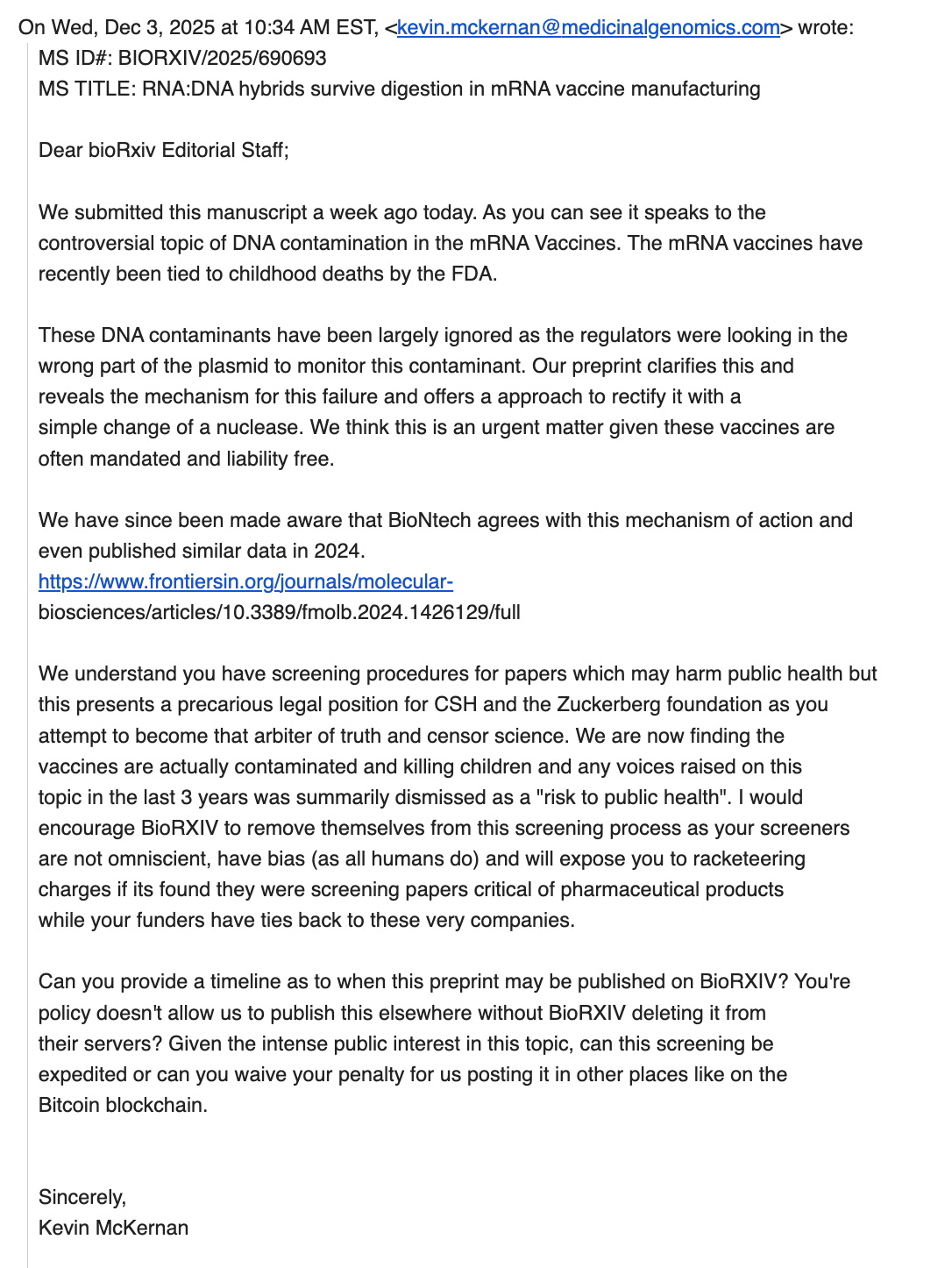
We then got permission from the Journal to Preprint it and decided to test BioRXIV on Wednesday morning Nov 26th.
We expect BioRXIV to censor it and will submit to Zenodo the moment they do but we wanted to have on record any such censorship at BioRXIV.
-UPDATE- 12-05-2025
The Journal accepted the manuscript with minor edits. Ironically later the same day we got this email (8 days after submission to BioRXIV). They refuse to host the paper!
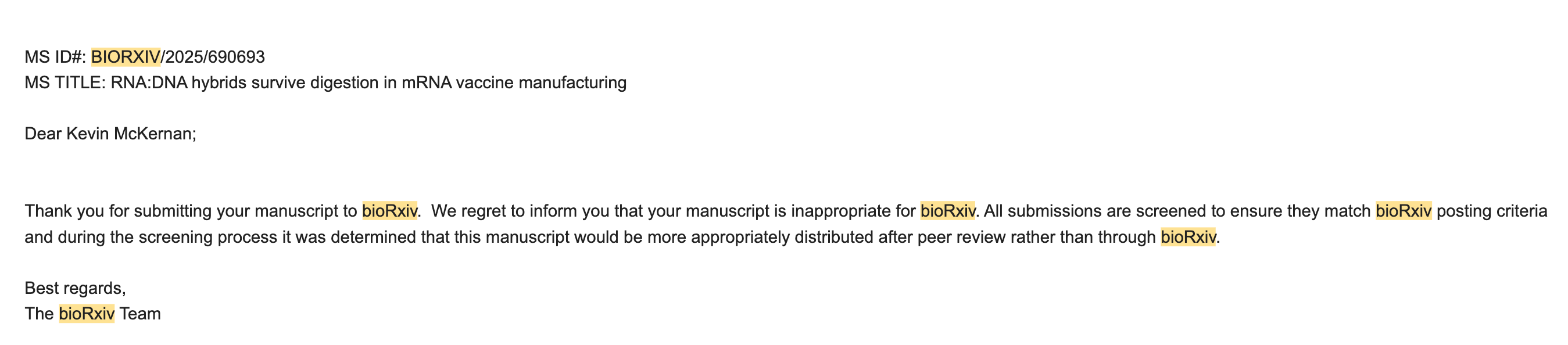
Perhaps they didn’t like the tone of my inquiry as to why the screening process was taking 7 days?
Bitcoin on chain txn
BTC txn-ID: 3c0c153734f673e8d459cf740c1e19c7ea74f4dd2cebdbf162cab3c8121b6dcf
Link to Zenodo after edits (hash will not match the draft on BTC). I will make a new BTC transaction once the paper fully publishes.
Link to After Edit files and the version sent to BioRXIV.
# RNA:DNA hybrids survive digestion in mRNA vaccine manufacturing
**Authors:** Kevin McKernan, Charles Rixey, Jessica Rose
**Download PreSubmission PDF:** https://mega.nz/file/FAIyAYAI#1ElkhGYkLVixG_GIa9TNccOSKhmSn15jGQpsciIgJ_w
**SHA256 Hash (for verification):** 7b0b9311fcb3855b98f03ad264606a530e2aa00ead416afadf7bb88f11553219
Abstract
The process of mRNA vaccine manufacturing relies on proper DNA digestion following an in-vitro transcription reaction to remove residual contaminating DNA from the plasmid backbone from the process. To assess the quality and quantity of potential DNA impurities in mRNA vaccines, we analyzed unopened, cold-chain compliant vaccine lots for residual DNA contamination using quantitative PCR (qPCR), RNase A/Qubit fluorometry, and Oxford Nanopore sequencing from two Pfizer and three Moderna vials. We compared spike-region amplicons and plasmid-vector amplicons to distinguish between DNA contaminant as double stranded DNA (dsDNA) versus RNA:DNA hybrids. qPCR assays revealed more than a 100-fold discrepancy in quantitation between dsDNA with RNA:DNA hybrids consistent with uneven DNase I digestion efficiency during mRNA vaccine manufacturing. Indeed, treatment of vaccines with DNase I-XT resulted in 100-1000X higher degradation of spike DNA, particularly in plasmid regions that form RNA:DNA hybrids. Together these results indicate that residual DNA testing which relies on a single qPCR for dsDNA fails to accurately quantify impurities, and that treating vaccine preparations with DNase I-XT during the manufacturing process may improve the quality by reducing contamination due to RNA:DNA hybrids.
Summary/Impact Statement:
Regulatory filings indicate that residual DNA testing typically relies on a single qPCR assay targeting the kanamycin (KAN) resistance gene within the plasmid backbone. Because this region resides in a DNase-sensitive portion of the vector, such testing underestimates residual DNA in sequences that remain RNA hybridized and DNase I-resistant, including the spike insert.
*This post is currently password-protected during the embargo period.* ```
Then:
1. Password-protect this Substack post
2. Put the Substack URL in the Bitcoin OP_RETURN
3. Remove password when embargo lifts
Below is a PNG file of the initial version. The 2nd PNG file below is the most current.

The version below is the edited version of the manuscript after Peer Review. More edits may follow as they type set the paper.
